A Real Downer?
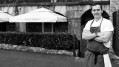
The French television viewing public are soon to have the dubious pleasure of watching yours truly stuff his face with slow roast belly pork, mash and Bramley apple sauce. I don’t think I’ve ever felt more self conscious, or uncomfortable than during that seemingly endless 20 minutes in the packed bar of Roast restaurant in London’s famous Borough Market, eating in front of a travel show film crew and a bunch of curious rubberneckers.
I mention this not only to exorcise an embarrassing memory (I at least managed to avoid dripping food down my shirt front), but because the afternoon’s filming also gave me the chance to pontificate about the current state of the London restaurant scene.
As it turns out, my pearls of wisdom will be reduced to a few on screen sound bites about gastropubs and ethnic dining, but trying to sum up our capital’s dining scene for a foreign audience made me realise just how much currently there is to celebrate.
Mark Hix is leading the new wave of modern British cooking with his recently opened Hix Oyster and Chop House near Smithfields market, and has also revived the notion of the classic hotel grill at Browns in Albermarle Street. British and Irish chefs including Theo Randall, Chris Galvin, Mark Edwards and most recently Aiden Byrne have staked their claim on Park Lane and revitalised hotel restaurants for the 21st century.
While Anthony Demetre and Will Smith have been busy at Arbutus and Wild Honey proving that great cooking doesn’t have to cost the earth, Claude and Claire Bosi have been equally as successful in demonstrating their particular brand of haute cuisine works as well in Mayfair as it did in Ludlow.
That’s just the tip of the iceberg. Smart operators like Tom and Ed Martin are proving there’s life in the old gastropub yet; restaurants such as Tom’s Place and Waterhouse are taking ecologically friendly dining to the next level and the Polish-owned Knaypa has continued to broaden the range of ethnic cuisines in London. And that’s without even mentioning the relentless expansion of Gordon Ramsay Holdings.
It’s all very well, you may be thinking, saying everything in the gastronomic garden is rosy, but haven’t you heard of a little thing called the economic downturn? As it happens, I have.
On the very day I sat in the packed bar at Roast, watching the front of house serve a rammed restaurant, I read David Sexton’s article Downturn Dining in the Evening Standard where he wrote that “When its so simple to roast a chicken, make a salad and open a bottle, it seems a mugs game to go out just because you need to eat” and extolled the virtues of ordering one course, sharing a pudding and bringing your own bottle.
Later that same day, a restaurateur told me that he couldn’t get a booking at St John for love nor money and was having to turn down friends who wanted to eat in his own restaurants because they were so full.
A few London swallows don’t make a nationwide summer, so I decided to test the waters with a deeply unscientific “downturn dining” straw poll of how busy restaurants around the country really are.
First up representing Wales was Shaun Hill at The Walnut Tree in Abergavenny: “Its f***ing packed here. I’ve got six tables in the bar that can’t be reserved. I arrived at 11.30am on Thursday morning and there were already six cars in the car park waiting to grab them. There’s still plenty of people who want to eat out, but not necessarily at £100 a head.”
For the North, Simon Rogan of L’Enclume in Cartmel in the Lake District who launched his informal Rogan and Company restaurant on 24 April. “We’re not feeling the effects of a down turn at all. We’re up on last year’s trading by between 15 and 20%. Last night we did 44 covers at L’Enclume which was full and 50 at Rogan and Company which is close to capacity. We’re full in both restaurants tonight. Things don’t happen as fast up here as they do in London but we’ve got a strong customer base that we’ve built up slowly who will eat with us whether they’ve got an extra £50 in their pockets or not.”
For the Home Counties, I spoke to Dominic Chapman of The Royal Oak in Paley. “Our business it better then it ever was - it’s unbelievable. Spend is up as well. We’ve had to put our prices up a little because of the rising cost of food, but people have accepted it. My style of food is quite simple so it demands using the very best ingredients, and they cost money. We need to try and keep the prices of main courses below £20 though because otherwise we could be viewed as expensive.”
Malcom Duck of Duck's at le Marche Noir and chairman of the Edinburgh Restauratuers Association told me, “We’re slightly up on last year. It could be that our three course, £28 menu is more appealing in these economically challenging times. I’m less worried about the number of customers than the rising cost of food and fuel costs which are also affecting wine prices. It may be that we have to cut our margins rather than pass on the costs to the customer.”
Not a representative sample by any means, but maybe an indication that things aren’t quite as bad as we journos seem to want to paint them. So what’s your experience? Is the economic downturn a real living nightmare or just a journalists dream?
- Alert members to this item
- Add a comment
- Receive new comments by email


Bookmark with: